Meeting Dan and Introduction to UBI

This text has English at a high level: It will be a real challenge!

During a GoodGym event, I met Daniel Mermelstein, who intrigued me with his advocacy for Universal Basic Income (UBI). Dan lives in North London’s Finchley area and has been actively campaigning for UBI. He believes in spreading awareness about financial security for all. “The idea of basic income is really all about financial security,” Dan stated. He emphasized that true UBI has five key characteristics: it must be cash-based, regular, individual-focused, unconditional, and universal.

Defining Universal Basic Income

Dan explained that UBI is designed to provide everyone with a floor of financial security, ensuring no one falls below a certain economic threshold. It’s meant to be a platform from which people can lead better lives.

The Motivations Behind Dan’s Advocacy

Dan’s interest in UBI began with his fascination with money and systems like cryptocurrencies. He realized how radical yet practical the concept of giving people money without conditions could be. Comparing it to existing systems like state pensions and child benefits, which are already somewhat universal, he saw the potential for UBI to transform societal structures. “This idea of just giving people money as a right felt radical but also very logical,” Dan noted.

Historical Roots of Universal Basic Income

Interestingly, UBI is not a new idea. Dan shared insights from Thomas Paine’s 18th-century essay ‘Agrarian Justice,’ which argued that land should belong to all humanity and proposed paying everyone from collected rent. This concept laid the foundation for modern basic income movements. Over centuries, figures from both left and right political spectrums have supported UBI for various reasons—from addressing economic inefficiencies to correcting injustices. This broad support underscores the idea that basic income is neither left nor right but forward-thinking.

Funding Universal Basic Income

One common question is how to fund UBI. While some propose taxes on robots or carbon emissions, others suggest adjustments within the existing tax system. Dan emphasized that making the case for UBI is crucial before delving into funding specifics. He pointed out that during crises like the COVID-19 pandemic, governments found ways to support citizens financially—showing that political will can drive funding solutions when there’s a clear vision.

Impact of UBI on Employment and Social Welfare

A major concern about UBI is its impact on work incentives. Trials have shown that most people do not stop working when they receive a basic income; instead, they use it to improve their quality of life—spending more time with family or pursuing education. For instance: – **Mothers** often spend more time raising their children. – **Students** may focus more on their studies. Dan argued that UBI helps people stand up against exploitative employers because they are not forced into poor working conditions out of fear of poverty.

Trials and Future Prospects

Discussing trials like those planned in East Finchley and Jarrow, Dan highlighted their importance despite limitations in scale and duration. These trials aim to measure qualitative outcomes such as health improvements and job prospects by providing selected participants with regular payments over two years. The goal is to gather data supporting the larger implementation of UBI. The excitement around these trials showcases a growing interest in exploring how UBI could reshape economic security for communities.

To explore Universal Basic Income and its transformative potential in depth, tune in to our latest podcast episode, which features campaigner Dan Mermelstein.

https://linktr.ee/TheBroadestChurch

Recovery coach for binge eating; some English phrases

Binge eating-consuming a lot of food in a short period of time

Laundry-2.58
Clothes and bed linen, for example, which needs washing. In British English washing is more commonly used than in American English

Shifterly-3.03
To be acting shifterly is to be acting in a suspicious way

Ingrained-4.28
To be a deeply rooted habit

Let yourself down-7.38
Let down-phrasal verb
In this context, to feel disappointed with oneself

Will power-7.54
Ability to control yourself or stop yourself from doing something

Urge-11.30
Binge urge-an urge to binge that feels hard to control

Disheartened-17.52
To feel disheartened is to feel discouraged or disappointed about something.

Fall short-21.12
Falling short-to feel that you’ve disappointed. In this case, she felt like she’d disappointed herself

Give more slack-21.21
To be less critical about something. So to cut yourself some slack means to be less harsh with yourself, generally to forgive yourself for not doing as well as you think you should

Slip-ups-21.30
In this case, when she goes back to bad habits without thinking

Holding space-21.36
Properly taking note of how it feels mentally.

Get over yourself-23.50
In this case, don’t make a fuss; make everything about yourself, and tell the person to stop complaining—you are minimising someone’s situation.

Open up-24.38
To disclose information and be honest about a subject
Hijack the conversation-26.28
To take over the conversation. If someone hijacks the conversation they might make it about them.

Published on spotify on August the 2nd 2024 and on other platforms on August the 30th.

https://linktr.ee/TheBroadestChurch

UBI phrases or terms for English learners

I interviewed a Universal Basic Income (UBI) campaign about what UBI is and why it is advantageous to society to introduce it. Below, I will discuss phrases or terms that an English learner might find difficult and put them in context. I will also go into more depth about why these terms/phrases are important in terms of UBI (in a bit more depth than was included in the podcast). It is recommended that you listen to the episode before looking at the vocab below.

The episode can be found on the podcast platforms below:

Spotify: https://spotifyanchor-web.app.link/e/4O4opl0crMb

Other locations: https://www.buzzsprout.com/2393977

Floor of financial security-1.56

Which they would fall below: Floor a minimal level for something. In this case a minimal level of money that a person would be living on. This minimal level of money is needed for someone to better cover the basics, such as food. It would, in theory, allow people to put more money towards eating healthily, which would mean less of a strain on the healthcare systems. It could also mean better mental health as people would be able to choose their work or negotiate for better terms of employment. Their employer would be less able to exploit them.

Vouchers/food stamps-2.18

A voucher/food stamps would be a substitute for cash. It is usually a slip of paper that people can take to a location and exchange for food. However, there is a stigma associated with the need to use cash substitutes, which could be avoided by giving people money. As well potentially being stigmatising these cash substitutes could mean that people’s poverty is alleviated but that they can’t spend money on things which help them improve their life circumstances. For example, someone on UBI could pay for food but also pay to take a short course, which would allow them to progress career-wise and thus have more job satisfaction or transition to another area career-wise. UBI could help people self-actualise. The other thing that UBI could do is allow individuals to spend more time with those close to them and have a better work-life balance.

Households-2.41

Person or persons living in a dwelling. In this case, households were mentioned in terms of the composition of a household. Households are important in the conversation about UBI because, as it stands at the moment, who you live with can impact if you receive benefits. Benefits being conditional on living circumstances can cause a problem because this can lead to strained relationships and resentment. Also, it can lead to reduced access to services whereby if someone lives in a household where they can’t receive benefits, they won’t be able to access certain services to get back to work because these services are only available to those on benefits and thus certain avenues to get back into work aren’t open to them.

Unconditional-3.07

In the case of UBI everyone gets the payment. They don’t have to give information about who they live with or if they are making an effort to look for work. An advantage of not having to prove that you are looking for work is that this effort is something that is very hard to assess. With UBI the individuals would be less stressed as they don’t have to prove that they are making an effort.

Welfare state-4.40

Welfare state provides security for individuals who are unemployed, ill, elderly etc. However, security is potentially inadequate and conditional, which is problematic.

Co-habit-5.20

Living with another person. Used for people who are married or in long-term partnerships.

State pension-6.04

A payment most people claim from the government when they reach retirement age.

Child benefit-6.21

Payment given to parents of children and teenagers.

Universality-6.40

Applicable to all people.

Fruits of it-8.55

What it produced in terms of its monetary value from labour on land, etc., potentially goes back to the idea that property is a type of theft. There was a period of time when property was claimed through theft (the start of the Enclosures Act), which was the start of capitalism and hoarded wealth. UBI would make things more equitable; it wouldn’t matter if you were born with certain privileges, e.g., with a certain level of wealth.

Mean spirited-14.54

Its unkind to make someone claim benefits because it is stigmatising and embarrasses people as they feel that they need to beg and jump through hoops to prove that they need help. People feel demeaned by the whole process.

Bureaucracy-15.40 bureaucrat, bureaucratic

The above describes processes that require too much paperwork. The fact that there is too much paperwork can make it daunting or difficult to navigate the system. If you were a person who had a disability which impacted your ability to fill in the paperwork perhaps you wouldn’t go for the benefits that you needed. If you have a mental health issues perhaps that would be a barrier to filling out paperwork because you would feel too overwhelmed to fill out the paperwork.

Stunted development 17.51

Stunted development in this instant would be children not developing or growing as they should. If, for example, a parent can’t feed their children properly, then that child could develop health issues such as deficiency. Certain deficiencies, e.g., vitamin D, can impact bone growth and cause a condition called rickets. If children don’t have enough to eat, their ability to concentrate in class and thus their education could be impacted.

Destitution- 20.01

When someone is destitute, it means they have no money or possessions. However, with the safety net of a Universal Basic Income (UBI), individuals can avoid destitution even if they leave a job that doesn’t meet their needs.

Fire-20.03

When an employer lets go over a worker due to misconduct or inability to do their job.

Means testing-22.32

Establish a person’s income to see if they should receive further money from the state.

Pernicious-25.10

The idea is pernicious—it’s harmful. In this case, it causes us to think that people could behave in a way that we view as not ideal, that with the introduction of UBI, some people wouldn’t work. It’s a harmful idea because it potentially causes us to view others in a negative light, when in fact, few people would choose not to work.

Fleece the system-25.22

If someone fleeces someone, they take something that isn’t theirs or take advantage of the system and rely on other people’s good will to have a better life without giving anything back. Personally, I believe very few people are out to fleece the system, and in fact, most people want to give back as they feel it gives value and meaning to their lives.

Drudgery- 27.16

Work that is menial or monotonous could also mean drudgery, such as the monotony of navigating the welfare system. UBI would potentially eliminate the need for welfare for some people. It would also mean that people could do fewer hours of menial work.

GDP-29.32

Gross domestic product-monetary value of countries goods and services produced during a given time period.

Asset-35.18

An asset is something of value that a person or organisation owes. It can be a physical object or a place, such as a building.

Windfall-36.22

Money that is received unexpectedly can be something that you are lucky to receive, like a lottery win, or it can be an inheritance when someone unexpectedly dies. The problem with an unexpected sum of money, as opposed to UBI which are regular payments, is that you can’t plan.

Would be interested to hear from you! What are you feelings about UBI? Are there any phrases/words which are new to you that are/aren’t listed?

Hobbs consultancy and neurodiversity (B2)

Interview Hobbs consultancy

Me:

Thanks. So I could start with why there is a need to get all employers thinking about employing people with autism.

Roxanne Hobbs (Head of Hobbs consultancy):

Yeah, I’m just thinking about how I want to answer that question because I believe many different aspects should be considered. I think there’s a massive underemployment rate amongst autistic people. The underemployment rate is significant; this needs to be corrected, and they need help finding more meaningful employment. I’m not going to be able to quote the number for you, but I know it’s too high. It should be a human right for people to have access to employment where they can make a difference. I also think autistic people have got so much to offer. I think they can be fabulous, and they can have such a lot to bring in and offer to the workplace. I would love to see the workplace benefit from those experiences and those skills.

Me:

As a consultancy, you look at enabling employers to employ neurodiverse individuals. What kind of organizations do you get coming to? What factors do you look at when improving the working environment for Autistic employees?

Roxanne Hobbs:

What kind of organizations? So, people don’t tend to come to us with that specific question about improving the environment for autistic people because of the nature of our business. We get people coming to us who want to improve their diversity and inclusion as an organization. They come in with that high-level objective, and then within that, we might be talking about gender, we might be talking about race, and then we start talking about neurodiversity as well. I think many of the organizations I work with are quite creative organizations. So, they might be do things such as branding or advertising or architectural firms. I actually think a lot of the time these companies have more neurodiversity than they realize within their building anyway. And I’m going to feed into a stereotype here. But if you think about an architectural company then Dyslexic people, the stereotype is that typically they good at that kind of creativity and spatial awareness.

And so it would make sense to me that within an architect’s practice, they might over-index on Dyslexia. And I think part of the process is it’s not just about getting people through the door, is it about creating an environment where those people can thrive, but also where they can feel able to disclose that they’re Dyslexic, that there’s no stigma or shame associated with it, and they can be seen for the strength that they bring to the table as well. 

Me:

How do organizations kind of typically respond when you start talking about neurodiversity?

Roxanne Hobbs:

You know what? This has been so fascinating for me. So, I started talking about neurodiversity and organizations in 2018 we did the Diverse Minds conference. That’s when we first started talking about it. And I was astonished at how it was embraced with open arms. Actually, I’d been speaking about gender for five years, at least before then. And I’d met a lot of cynicism, a lot of microaggressions against me. Somebody literally said, oh, you’re going to start burning your bra now, Roxs and those kinds of comments. And it felt like a constant push to persuade people that gender diversity was good for business. I haven’t experienced that same cynicism when speaking about neurodiversity. And I think it’s because if it’s explained well to people and especially the concept of the Spiky profile, that someone who is neurodivergent will typically; that they’ll be things they excel in and things they struggle with. I think leaders can see quite quickly the potential benefits that such individuals can bring to organisations.

So, I think people get the business advantage of embracing neurodiversity quicker than they understand the business advantages of gender diversity in the workplace. That being said, there is the danger, isn’t there, that we’re just talking about a certain type of neurodiversity. We’re talking about, God, I hate this language. I don’t really want to use it, but we’re talking about the individuals that are going to be able to perform at a very high level within an organization. Obviously, you know as well as I do that autism is a very complex condition, and you’ve got an enormous amount of variety in there, and you’ve got some people that really would struggle in the workplace on that spectrum. And I am worried that that kind of business case argument excludes a lot of autistic people. So, there is a downside to that. In summary, the business case is understood a lot more readily than it is with other diversity metrics. But there’s the danger that that doesn’t include all neurodivergent people or autistic people even.

Me:

I am interested in hearing more about how your organisation have gone towards more employment for neurodiversity for example you mentioned the neurodiversity conference what did that involve?

Roxanne Hobbs:

So we’ve done two, one in 2018 and one in 2019. And then we’re going to do one in 2020, and then the Pandemic happened. The 2018 one was all about celebrating neurodiversity in the advertising industry. And what we did was invite people who identified as neurodiverse, whatever language you prefer to use to share their stories. So, I had an autistic CEO, for example. We had a dyslexic female founder, and they spoke, they stood up and shared their story of their struggle, but also of their strengths, their so-called superpowers that they brought in, and how they had almost learned to see their neuro divergence as a critical part of their success, not something that held them back. And it really was for me, the underlying theme of that event was about challenging stereotypes, and I think it had real meaning for me on a personal level as well. My son had been diagnosed with autism a couple of years before, and I had definitely been guilty of having stereotypes in my head about what that meant for him and his long-term career. And so, it was incredibly healing for me to see an autistic CEO who was thriving in his job just to see what was possible.

And I think from what I’m told, it had the same impact on all of our neurodiverse people in the audience. So, they were like, this doesn’t need to hold me back. I don’t need to buy into these limiting stereotypes that exist in our culture. That was the first one and then the second one. I felt it was really important to be upfront about some of the challenges that people might face because I feel like maybe we just presented the shiny side of it of all the benefits that it brings. And obviously there’s very real challenges that some of these individuals would have on a day-to-day basis in an organization. So, the second one was much more focused on the kind of support that people could get, like coaching in organizations. It was that neurodivergent design e.g., designing buildings and cabins that were neurodiversity friendly. It was about art created by neurodiverse people. It was, really looking at more practical support and barrier removal for people. And the idea was that our third event was going to be about neurodivergent leadership, but the pandemic has impacted our schedule.

Me:

Okay, so I’m assuming a divergent friendly building focuses on having the right kind of lighting, sound proofing offices, that kind of thing?

Roxanne Hobbs:

Yeah, absolutely. That I’ve just been judging the neurodiversity Awards for genius within. And there’s a really interesting entry by Balfour Beatty. it might be worth speaking to them because this is a little bit second hand, but my understanding is that they have a lot of their workforce in those kinds of temporary huts that people work in. And they worked with one of the autism charities and the designer to really create that temporary work accommodation. So like you said really thinking about the sound, the lighting, just other things within it as well. And it’s a really neat little case study of what can be done.

Me:

There are costs involved. However I suppose it also helps people who aren’t neurodiverse to actually work well. Some of the adjustments, for example, might be useful just generally.

Roxanne Hobbs:

Yeah. I think when you think about inclusive design, there’s a thought that one person’s challenges. Let’s say you take an autistic person’s challenges with a specific work environment. That person’s challenges are all of our micro challenges. So, if you solve for that person, you’re actually making it easier for everybody because you’re addressing all of our micro challenges. So even though I don’t have an autism diagnosis, I still find echoey buildings really irritating and I still get distracted by lights. And so, a building that reduces that noise, would be a better workspace for me as well. So, as you solve for that, you solve for everyone’s micro challenges, it’s a really nice design thought. You tend to find that these solutions are good for everybody.

Me:

So that’s the building side of things what about neurodiverse adjustments in general for example, how much requirement is it for companies to do diversity training?

Head Hobbs consultancy:

There’s no governmental requirement at all. There’s nothing that they have to do. There’s nothing. The companies that I work with have decided that diversity is the future of business and they want to educate their employees and create behavioural shifts in their organization to welcome that. So, it’s completely been kicked off by a CEO or an HR director or head of HR who’s like, actually, this makes business sense for us. Let’s invest in it. And when I say invest, obviously financially, but time and resource and energy as well. So yeah, it comes from good people in the organization thinking about the possibility.

Me:

However, the lack of government pressure may mean that some of the companies don’t really think about diversifying their work force.

Head Hobbs consultancy:

The vast majority of companies, probably.

Me:

However, I have had conversations with people and they tell me they feel there is pressure to diversify. Where does the pressure come from?

Head Hobbs consultancy: 

Don’t get me wrong, they are under pressure too. But that pressure isn’t coming through a legal framework from the government. They don’t have to do any kind of diversity training or work. The pressure is coming from other parts of industry. So, say you work in advertising and say Coca Cola is looking for a new advertising agency. Coca Cola will be in their brief for the agencies to respond to. They’ll be saying to the agencies, what are you doing about the diversity, equity and inclusion in your company? What’s your plan? What’s your strategy? So potential future clients are putting the pressure on. Also, people who work at the company will be putting pressure on, especially the millennials and next generation coming through. They’ll be saying, what’s going on? Why is there a bunch of white men at the top? We need to be doing something about this. And they’re demonstrating that with their feet as well. So, they will leave companies or just join companies that have really clear diversity strategies in place. So, they are under pressure. But it’s not coming from any kind of legal framework. It’s coming from clients, suppliers, talent, people within the organization as well.

Me:

So people have taken the diversity inclusion training. Have you had people feedback to you about improvements from their staff or anything like this?

Head Hobbs consultancy:

Absolutely. One of the most wonderful outcomes of doing neurodiversity workshops and organizations is it starts a conversation about neurodiversity, and then people start to come forward and say, hey, I’m autistic, I’m dyslexic. I’ve never felt safe to disclose that before. I’ve got loads of examples of organizations where that’s happened after we’ve been in. And then those people are then getting the support that they need, but they’re also contributing to that cultural shift where it’s all right to have to ask for help sometimes it’s all right not to be a perfect human being, whatever that is, because none of us are. So, yeah, I definitely see that kind of systemic change happening. And some organizations I’ve gone into, and then I don’t see them for two years. And then I hear that they’ve done a neurodiversity panel that they had a partnership with Ambitious about Autism, that they developed all of these kinds of strategies after we’ve gone in. And we’ve always done the awareness piece and introduced the topic, and then action has been taken off of the back of that to instigate real change. It’s great.

Me:

Do you think there is anything more we can be doing to encourage diversity in organisations?

Roxanne Hobbs:

It’s a really good question. Yeah. I don’t know where I stand on that. When we think about diversity, I say that we’re in the third paradigm at the moment. So, at the beginning, it was all about the legal frameworks, actually. So, it was all about people getting sued for sexual discrimination in the 70s. And because there was so much legal stuff around diversity, one of the unintentional outcomes of that was people were quite scared about hiring for diversity, then we went from the phase of it all being about the moral and social responsibility, which was effective. But there’s a lot of people that if you say you should do this, you ought to do this, they just switch off and stop treating me like a child and telling me what to do. I think where we are now is characterized by the business case and by business case, I don’t necessarily mean commercials and profitability, although that its part of it for most companies. But I think for some people, the business case is recruiting and retaining the best talent, coming up with the best solutions, being an exciting and culturally interesting place to work.

And I think once we’ve entered that third paradigm that’s been the most effective. So, yes, I think probably it needs to be accompanied by some logistical stuff on a government level. Like an example would be, I’m not talking about neurodiversity here, but an example on gender level would be if the government could make paternity leave as easy to take up as maternity leave. That would create a huge shift in terms of gender balance in organizations, because at the moment, it’s expensive for dads to take the extended leave. So, I think there are frameworks that the government can put in place like that, and I think they’re working on. and actually, these might already exist, like design standards about making things accessible for all in terms of information communication and technology (ICT) systems and so on. So that kind of, again, the framework can exist there. But I see a lot of success in the paradigm that we’re in, which is about focusing on the business case.

Me:

What kind of industries do you work with that employ neurodiverse people?

Roxanne Hobbs:

Yeah. It’s hard not to stereotype when you answer that question, but I see tech industries over indexing on autism, and ADHD to an extent. Veterinary industry, I work with that. Obviously, you have to be really good at science to become a vet that attracts certain types. I also work a lot in the advertising industry. The creative industries, they seem to over index. Well, they over index in all neurodiversity, actually. But Dyslexia, in the creative agencies, particularly in Dyslexia, there are industries that I think over index because of the nature of the work that gets put out of them. But you’ve got to be careful of the stereotyping, haven’t you? Because I think autistic people, for example, can be super creative, really creative. I’ve seen amazing creative work of autistic people, and so it would be a mistake just to think, oh, it’s just the Dyslexics that are great in terms of creativity.

Me:

Any other comments on helping the neurodiverse into employment?

Roxanne Hobbs:

How to get more neurodiverse people into work? Yeah, I think it’s really complex, and I think it’s not just about getting them in. It’s about there being an environment there which they can thrive and succeed in, because I’ve seen that happen where, I don’t know, say you’ve got an apprentice scheme and you’ve got an autistic person coming through that kind of scheme, and then they’ve gone into an environment which hasn’t been suitable for them. So, for me, it’s about the diversity, but then about the inclusion once they’re there as well. And that happens to be a two-pronged approach. And I think there’s a lot of neurodiversity in plain sight in the workplace that those people are there already. But there are also people that have been systemically excluded from the workplace because of their neurodiversity. Yeah, I don’t think I’ve got anything more. It’s complex, it’s hard, but I think we can raise awareness. Can’t we? People can understand their own stereotypes. I talk a lot in our unconscious bias training about stereotypes and helping people understand that if there are spelling mistakes on a CV, that doesn’t mean someone’s lazy. It might mean that they’re dyslexic. Or if you’ve got someone in an interview who keeps looking around the room and not getting eye contact with you, that doesn’t mean that they’re not interested.

It might mean that they’re autistic and just struggle to maintain eye contact. And so, trying to educate people on things the way it might show up in the recruitment process. So, they’re questioning themselves and not falling into those assumptions. I don’t think there’s like one thing that we need to do. I just think there’s lots of little tweaks and hacks to our current processes that need to happen to support more people in, but also to make them feel included once they’re there.

Me:

Do you instruct people in terms of how to maybe change their recruitment process so they don’t filter out neurodiverse candidates, for example?

Roxanne Hobbs:

Yeah, we do work with people on the recruitment process. The only pushback I would have is on your word instruct, because what we do is coaching approach, because we think if people work out for themselves, there’s more likely to be sustainable change. So, what we do is get them to map out their recruitment process and then ask questions about it, and then they might start to work out for themselves what might not work.

Me:

So how have people changed the recruitment process as a result?

Roxanne Hobbs:

Well, the most common thing that I’m seeing now is when they invite people to interview, asking them, do you have any additional needs for the interview process? And so, what we do at Hobbs Consultancy is if we’re recruiting, we send out the questions for the interview the day before. This is an example of a hack we’ve made. The person can read the questions and not be kind of blindsided in the interview with them. But asking what needs a person has, that becoming a part of your process to ask anybody that’s coming in for an interview, what additional requirements, what reasonable adjustments do they need for that process? And it might be that they need to not travel in rush hour or they need to be in a room without air conditioning, I don’t know. But just normalizing that it’s okay to ask for different things. So that would be an example.

Me:

I am personally in favour of getting rid of interviews I don’t think that they suit everyone.

Roxanne Hobbs:

I’ve got a lot of sympathy with that argument. I don’t think informal interviews are very helpful at all.

I completely agree with you. I think informal interviews suit a certain type of person and I’ve seen organizations like Microsoft are doing this really well where they test people’s skills rather than their ability in the interview.

Me: 

Do you have anything else you’d like to say?

Roxanne Hobbs:

And do I have anything else that I want to say? Not really. I think it’s really important to me because I have a son who’s autistic, and I want to create a workplace that is going to be welcoming to people like him and that appreciates the talents that he’s got. As more and more kids get diagnosed, I think there’s more and more parents who will be feeling the same and want to create that change for the children of the workforce of the future. So, I’m really hopeful that we are on the cusp of creating a massive shift. I’m hopeful.

End note: 

With thanks to Roxanne Hobbs of the Hobbs consultancy for taking the time for this interview.
The recruitment process/work (level B2)

I am hoping this is my last reflective blog for a while. I will hopefully be going back to interview people in a month or so. I am looking to temp, so I can have the time to work on blogging and videoing and develop skills that will allow me to pursue a career path with a content development focus.


I have a few more thoughts concerning the recruitment process and the nature of work. The last permanent job I applied for before looking into making temping work viable was a job that had a straightforward application form. As I am sure you’re aware, with most jobs, you have a form that asks you for the exact date that you worked to and from for a specific organisation. There are two problems with asking for to and from dates:


1) does anyone remember the exact day that they started working somewhere!


2) it makes it harder for certain people to get back into the work place;

for example women who’ve taken time out to have children, people with criminal records, anyone with a sketchy work history because they have some kind of neurodiverse condition and/or people with physical health issues.


The form I had to fill out didn’t ask for any job history details; the only questions the potential employer asked were about demonstrating certain skill sets. This approach is excellent as there is then no prejudice on the employer’s part about work gaps or the type of work you’ve done. I’ve heard that some people look down on candidates with a lot of volunteer experience. They wonder why the candidate has never found anyone who wants to pay for their time and effort; volunteering thus devalues the job applicant. However, I’ve also heard that employers love people who volunteer, so I am in two minds about this.

However, with an application form that just relied on the candidate to answer questions relating to the job, the candidate is judged less on their work history and more on what they potentially bring to the role, which is good.

Rachel is interviewed (the reason why I am not blogging till July) (B1/B2)

I had an interview part way through May, tbh it was more of an informal chat than an interview. I got through the informal chat and am now preparing for a trial day. So there are a few things that were interesting in terms of the recruitment process:

Firstly the job was aimed at neurodiverse people. Employers aren’t that open to taking on people from neurodiverse backgrounds (especially those on the Autistic spectrum). So it’s good to have employers that champion neurodiversity. 

Secondly, it was an informal chat and not an interview, which is good for those on the spectrum. People on the spectrum tend to do poorly at interviews due to the following:

  • nerves-anxiety is a big issue for a lot of Autistic folks
  • our condition makes our work history a bit shaky
  •  some people can have a problem with taking things too literally (not an issue in my case) 
  • problems with knowing what the interviewer is looking for when they ask a particular question. 

Interviews aren’t the best form of recruitment for candidates in general; they are about as much use as tossing a coin. As interviews fail wrt choosing the right candidate, they are a waste of resources. 

Thirdly instead of drilling you at an interview, they have a trial day to assess your suitability which seems fairer.

The trial day is in June, so I am taking June off to ensure that I am as prepared as possible. 

So the final thing: if I get the job, I will still blog, but it will be once a month. See you in July, and I’ll update you then!

Useful English phrases: 10 mins to end Stunt man

They have a good body of work behind them-they have many years of experience in this field. This phrase is used for people in arts/people who write books/reports.

…where the principal actors aren’t required-a principal actor can be anyone with a speaking role on camera; however, it will depend on the nature of the production as to who counts as a principal actor.

…it doesn’t quite take the same toll on your body-something that takes a toll on your body ‘stresses’ the body and, over time, can damage muscle, joints etc.

CGI: computer generated imagery-computer generated effects in TV/film.

….doesn’t go into shards-piece of broken glass that typically has sharp edges.

5 mins to 10 mins stunt man interview

The work kind of picked up after that-this means he started to gain more work.

All I wanted to do was make a living from it-earn money to pay for bills, accommodation, and food.

What are the perks of the job-what is are the advantages and good things that come with working in that job.

Amazing sets/amazing scenery– set: film sets, where the film scene is shot. The scenery can be part of the set and also just located outside generally, e.g., the scenery in the countryside was amazing.

I’ve found I’ve had no end of stitches– something which sews the edge of a wound together.

In my downtime– downtime is time spent not working, this usually refers to weekends or holidays but can refer to time in between jobs when the work is on a contract basis.

I rehab everything- to rehabilitate, in this case, rehabilitation after injury.

Keeping myself fit-in this case, in good physical shape and strong.

That’s the pinnacle– a high point in the career of a stunt guy.

Useful English phrases from an interview with a stunt man first 5 mins

I’ve put up sentences with words in bold that I think people learning English might struggle with and I’ve explain what they mean. I’ve also explained useful general vocabulary e.g. vocabulary related to hobbies.

I grew up with a lot of old school TV shows like the A team-this term refers to something which was done differently in the past. Potentially in this context it means retro; something which is done differently now by still is kind of cool. However in other contexts old school can mean something which is outdated and needs to be changed.

Stunt man-a man who performs stunts as a double for an performer in films. Stunts can be physical actions which are complex to performer or acrobatic in nature and thus may be difficult for the performer/may be actions that can potentially result in injury if someone hasn’t had years of training.

It looked like the best, fun lifestyle-way of living

Hobby/sport vocabulary-

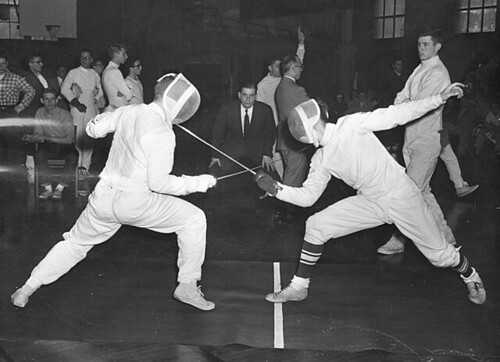
Fencing

“Fencing duel” by uwdigitalcollections is licensed under CC BY 2.0

Motor sports


“Motor cycle race” by ramnath bhat is licensed under CC BY 2.0
“Susie Stoddart Mucke Motors Sport AMG Mercedes C Klasse Brands Hatch July 2006 IMG_4768” by tonylanciabeta is licensed under CC BY-SA 2.0

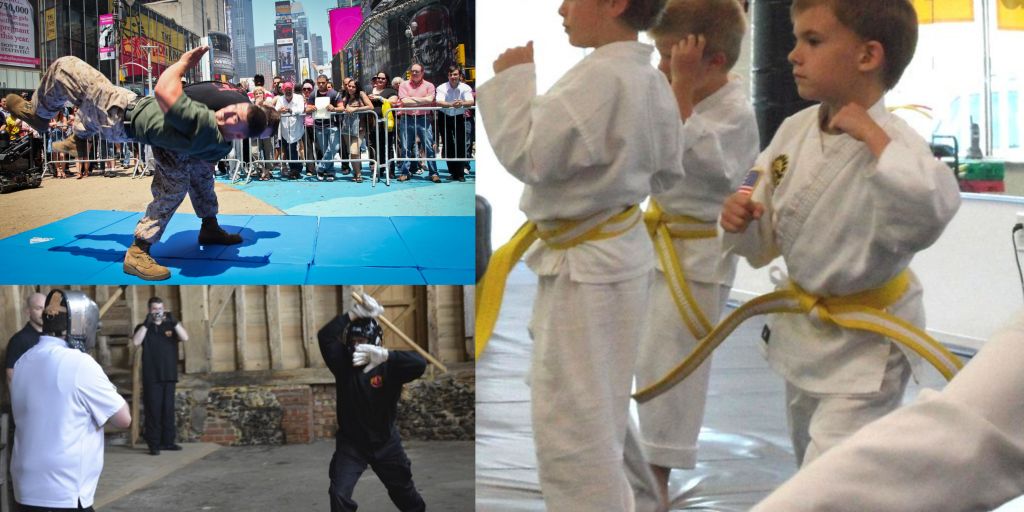
Martial arts/combat sports

“Martial Art Demo during Marine Day Times Square, May 27 – Fleet Week New York 2011” by NYCMarines is licensed under CC BY 2.0
“An English Martial Arts exam” by adamnsinger is licensed under CC BY-ND 2.0
“kids martial arts pittsburgh” by PKA Karate is licensed under CC BY-ND 2.0

Swimming

“swimming” by Jim Bahn is licensed under CC BY 2.0

Trampolining


“Day 285 – Trampoline!” by lintmachine is licensed under CC BY-NC-SA 2.0

Gymnastics

“Men’s gymnastics” by William & Mary Photos is licensed under CC BY-NC-SA 2.0

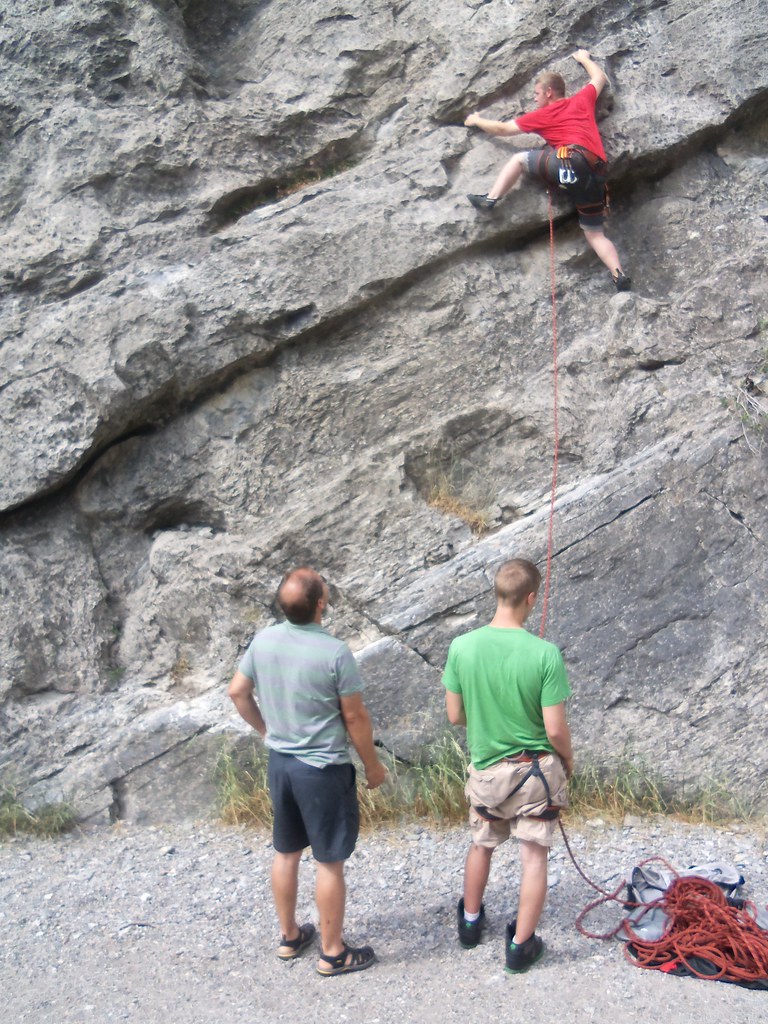
rock climbing

“Rock Climbing” by DannonL is licensed under CC BY-SA 2.0

scuba diving

“Palm Beach SCUBA Diving” by SteelCityHobbies is licensed under CC BY 2.0

Parachuting

“Palm Beach SCUBA Diving” by SteelCityHobbies is licensed under CC BY 2.0

I’ve trained in gymnastics but I had to specifically gear that towards, the requirements of the British stunt register– gear towards (make it suitable for a particular purpose-in this case eligibility for the stunt register).

..it wasn’t as people would imagine that as soon as your qualified your phone will be ringing off the hook– to have gained a qualification after studying an academic or vocational qualification. To ring off the hook-to have people phoning constantly.

An interview about Careers and teaching-phrases/specialised vocab

Academically gifted-in this case it means you excel in terms of academic performance

Academically inclined-its part of your personality to want to study academic subjects, maybe you are curious about a certain subject are or you just like to have a certain type of intellectual challenge

Core subjects-those subjects which are compulsory throughout each key stage of the curriculum

Peer pressure-pressure from ones peer group, a peer group is people who are the same/similar in one aspect such as age, background or social status

Qualifications-an exam, which is recognised as showing a certain level of ability or conferring on someone professional status

Aptitude-a natural ability in a certain area

Tone deaf-in this case, it means problems recognising different musical pitches

Innate ability-something someone is born with, aka natural ability and natural aptitude

Tell on you-in this case; it will have a negative impact

Mortgage-loan towards buying a house

Crop up-to appear

Switch off-to not pay attention to your work and to take a break

Apprenticeship-a programme which trains someone for a particular trade

Pastoral-emotional and social support

Special needs-disabilities that may be mental, psychological or emotional